
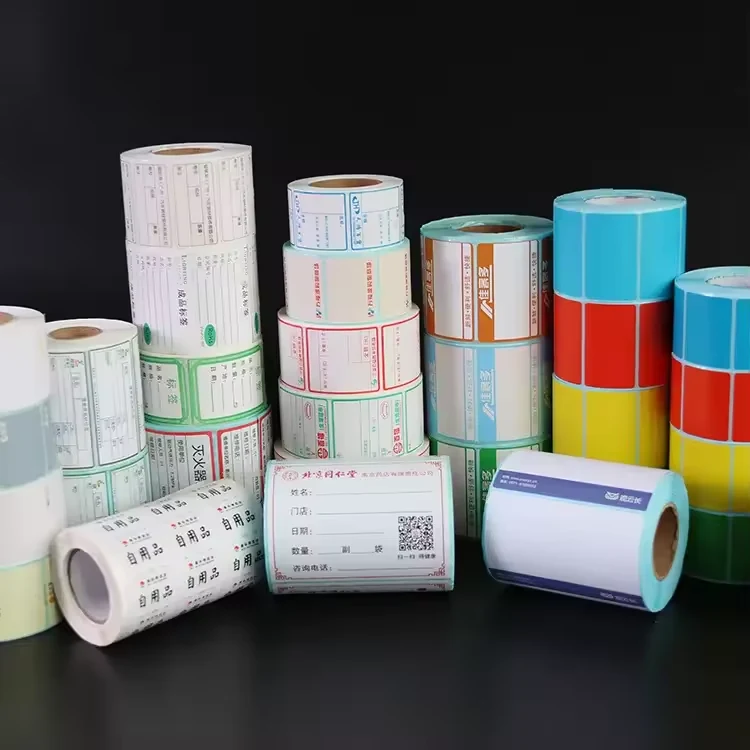
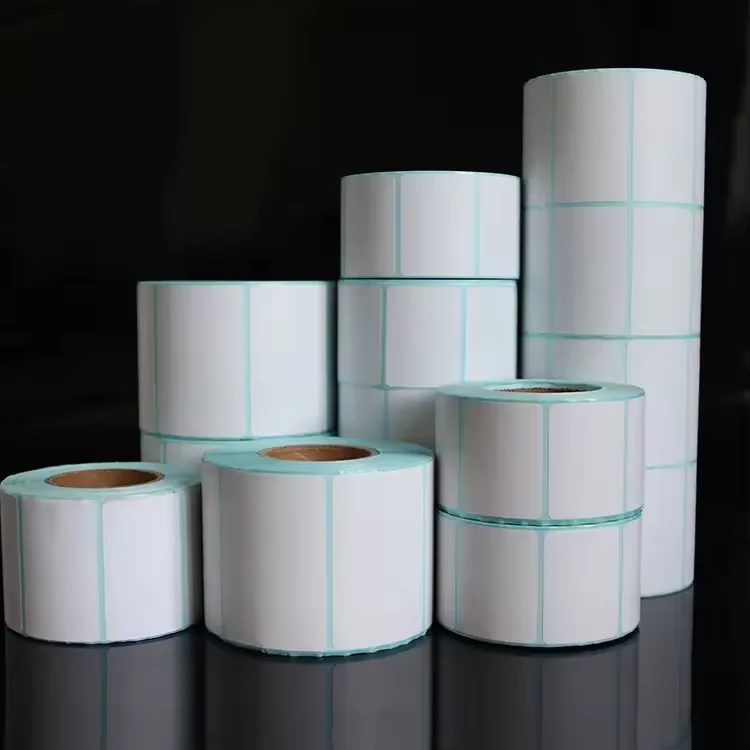
Ref. 1600733966560
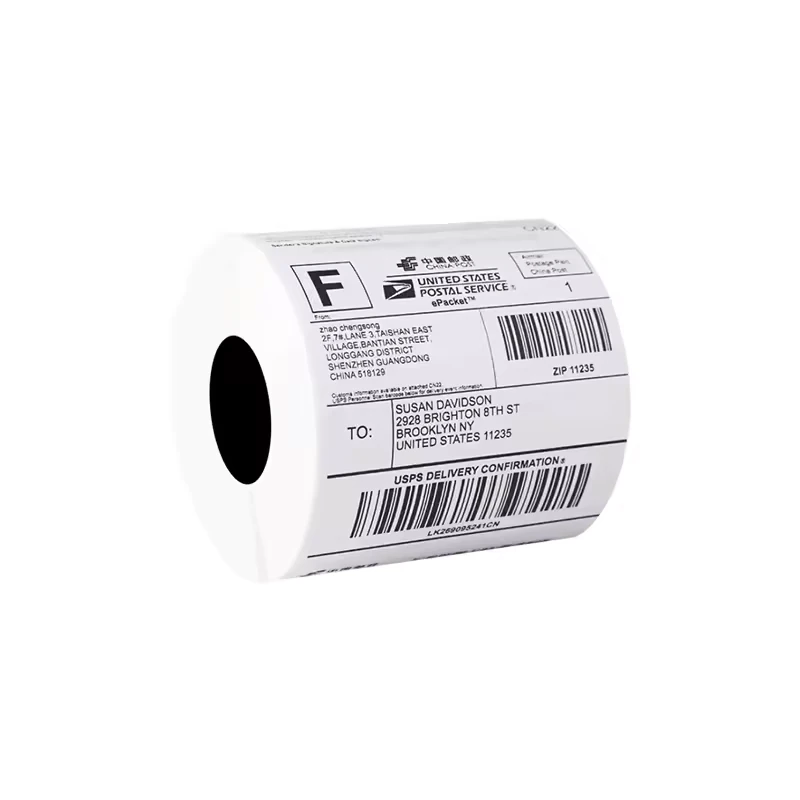
Custom Gold-Stamped Thank You Label Rolls
Listed size 40*30-780
$0.40–0.42 / roll
Minimum order: 1000 rolls
View specifications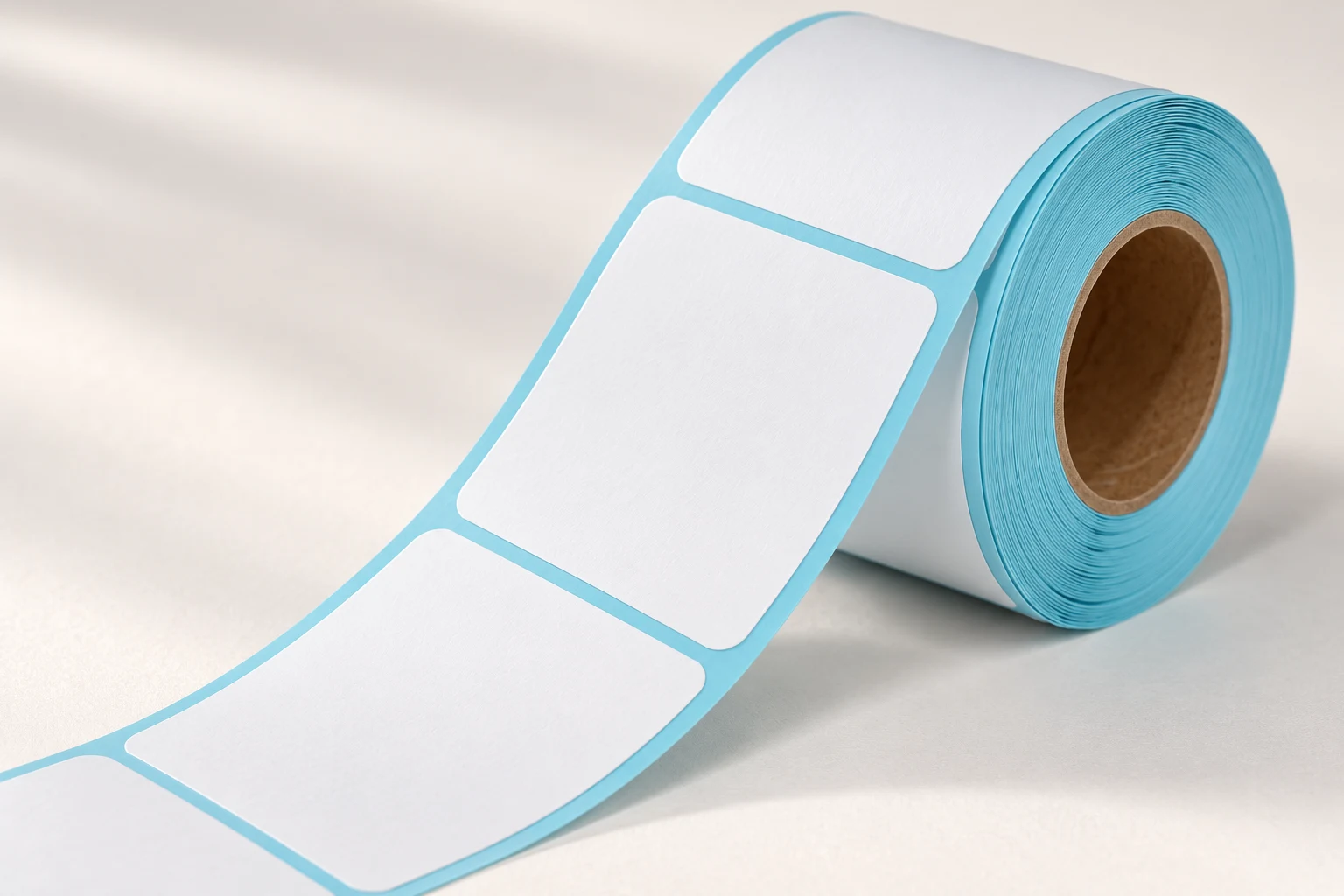
PRODUCT SPECIFICATION GUIDE
CXPAPER supplies self-adhesive label paper for shipping, barcodes and product packaging. Choose direct thermal or compatible thermal transfer media, then define the label size, adhesive, roll format and artwork for your application.
PRODUCT CATALOG
Ref. 1600733966560
Listed size 40*30-780
$0.40–0.42 / roll
Minimum order: 1000 rolls
View specifications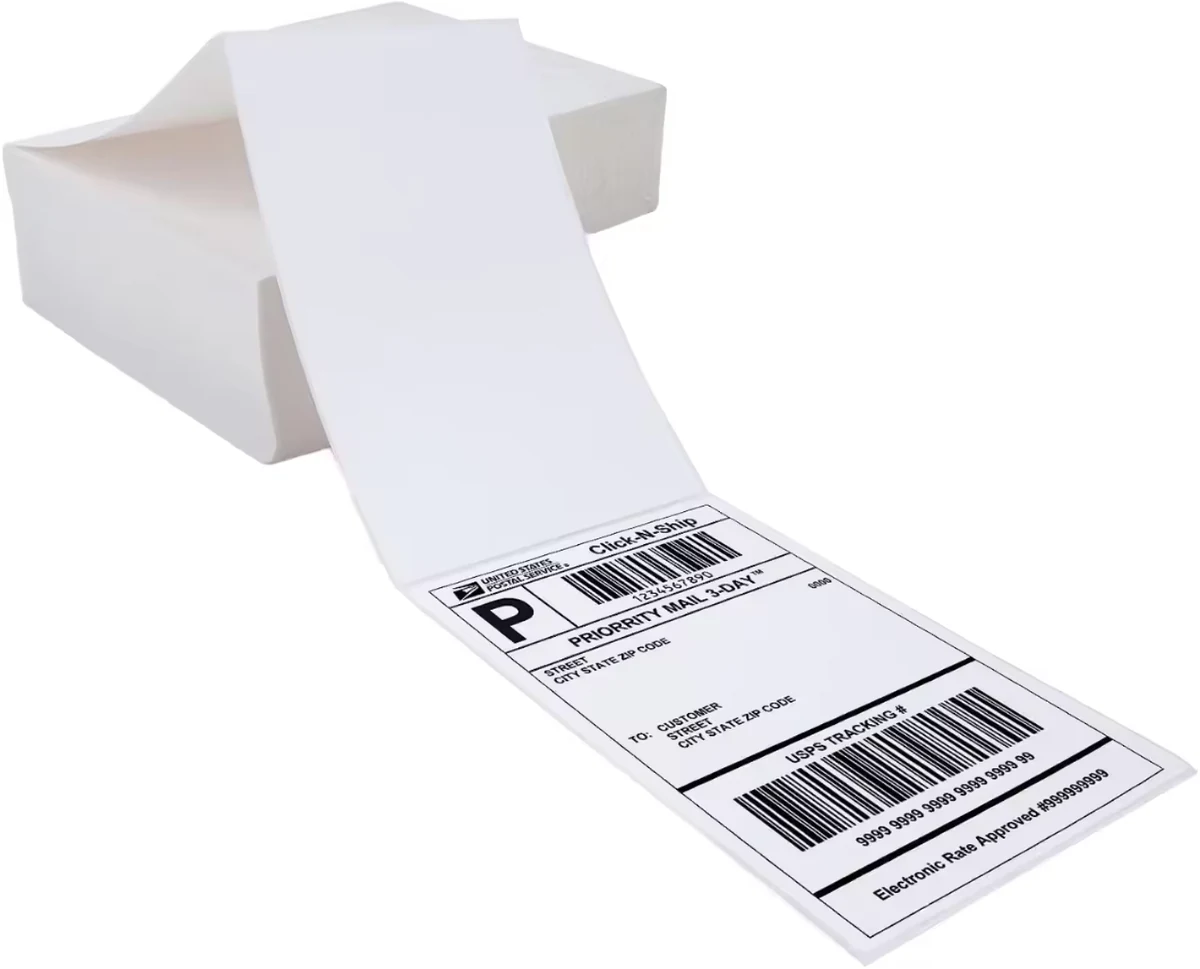
Ref. 1600940618455
Listed size Customized Size
$0.02–0.04 / roll
Minimum order: 72 rolls
View specifications
Ref. 1600883040118
Listed size 57*30mm
$0.04–0.05 / roll
Minimum order: 72 rolls
View specificationsDefine the requirement
Keep the product range and the complete order specification distinct. Use the fields below when discussing a new order or reviewing a replacement.
Self-adhesive label paper combines a printable face material, adhesive and release liner for shipping labels, warehouse barcodes and product identification. CXPAPER's range includes thermal and coated paper directions, with label sizes such as 100 × 100, 100 × 150, 60 × 40 and 40 × 30 mm. Begin with the printer's method and the surface the label must identify, then describe the roll or folded format your workflow needs. Logistics, warehouse and product-label enquiries also need the application conditions and artwork. These details help separate a label that fits the machine from one that has been evaluated for the actual package and use.
| Range information | Product context |
|---|---|
| Paper material directions | Thermal base paper and coated base paper |
| Listed label sizes | 100 × 100, 100 × 150, 60 × 40 and 40 × 30 mm |
| Custom brief | Dimensions, printed artwork, logo and outer packaging |
| Confirm for the order | Information to provide |
|---|---|
| Print method and face material method / material | Identify direct thermal or thermal transfer, the exact printer model and any ribbon currently used. |
| Finished label and sensing mm | Label width × height, liner width, gap or mark details and intended print direction. |
| Delivery format roll / fanfold | Core ID, maximum roll OD, winding arrangement and labels per roll or folded pack. |
| Application conditions surface / °C if known | Package material and shape, temperature when applied, later storage/use conditions and the required service period. |
Schematic for specification. It does not define the dimensions or construction of every supplied item.
Selection decisions
Direct thermal printing forms an image on heat-sensitive media without a ribbon. Thermal transfer uses a compatible ribbon. Identify the configured printer method before choosing the face material; coated paper should not be treated as direct thermal merely because the label dimensions fit.
Name the real surface, such as corrugated board or plastic packaging, and note curves, texture or any contamination. Separate the temperature during application from the conditions later in storage and use. Evaluate a proposed construction on that surface before relying on an adhesive description.
Finished label size is only one input. Include liner width, core, roll OD, label gap or black-mark arrangement and the way the roll unwinds. For fanfold media, describe the folds and feed path. Use the printer instructions to review these fields and leave unknown values for discussion.
100 × 150 mm is not exactly 4 × 6 inches, which converts to 101.6 × 152.4 mm. Check the required media size, page template, scaling and print orientation. A sample should carry representative text and barcodes so that a layout problem is visible before ordering.
| Layer or format | Its role in the brief | Buyer information to supply |
|---|---|---|
| Face material | Receives the print and carries the information | Print method, surface finish and use conditions |
| Adhesive | Connects the label to the application surface | Actual substrate, application temperature and intended removal or retention |
| Release liner | Supports the label before application | Printer feed and sensing needs; liner width |
| Roll or fanfold format | Controls how the media reaches the printer | Core, OD, winding or folds, and labels per unit |
Custom paper & packing
Keep the label artwork and the label construction in one project, with separate review points. A logo proof does not resolve the adhesive, sensing or winding specification.
See the custom-order processBefore order approval
| Check | How to review it | What to record |
|---|---|---|
| Feed and registration | Run the sample with the intended printer, settings and sensing mode. Review whether the print sits in the required position across repeated labels. | Printer, settings, label and liner dimensions, sensing arrangement and representative print samples. |
| Package application | Apply labels to the actual packaging using your normal preparation and application method. Observe edges and adhesion under the conditions your operation needs to evaluate. | Surface, temperature, application method, observation times and photographs. Define limits before acceptance. |
| Information and handling | Read the printed text and scan the representative barcode in the intended workflow. Review the handling exposures relevant to the job. | Artwork revision, ribbon if used, scanner/workflow and observed print condition; no universal durability is implied. |
Agree the sample scope and acceptance criteria for your order. These review points are not a claim of a completed test.
Packing & repeat orders
State whether the purchase quantity refers to individual labels, rolls, folded packs or cartons. Include labels per roll or pack so different quotations can be compared on the same basis.
Product questions
No. Direct thermal media and coated paper are different options. Confirm the print method, including whether a ribbon is used, before choosing the label material.
No. Four by six inches converts to 101.6 × 152.4 mm. Confirm the exact dimensions your printer, label layout and logistics workflow require.
Label dimensions, printed patterns, logos and outer packaging can be discussed for your order. Include a drawing or a sample description with your enquiry.
Describe the surface, its shape, the temperature at application and the conditions during use. Evaluate the chosen construction on the actual surface.
Review the construction, surface shape and cleanliness, application method, temperature and time after application. Send photographs and those conditions with the sample reference. Edge lift alone does not identify which input needs changing.
No. The liner, core, roll diameter, winding and sensing arrangement may differ. Compare these fields with the printer requirements before treating two rolls as interchangeable.
No. Describe the actual surface and environment, then agree an evaluation on your package. Terms such as permanent or removable do not replace a check of the selected construction in the intended application.
Your product brief
Add this requirement to your brief. You can include several product families or separate sizes, then review them together before contacting CXPAPER.
Product specifications are saved on this device. Contact details are entered separately.